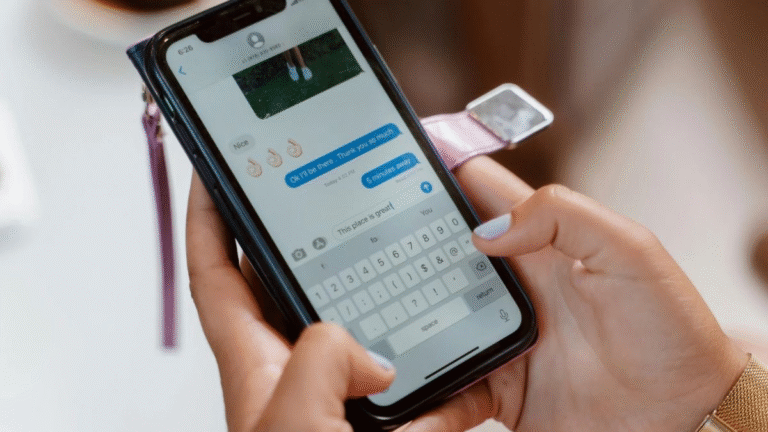

Why Voice Notes Are Replacing Texts in 2025
Picture this: it’s 2 AM, and Sarah gets a voice note from her boyfriend who’s far away. Instead of just hearing “goodnight,” she hears his real voice tired but still warm whispering how much he misses her laughter. It feels like a special, intimate moment. The connection feels so real, even though they’re miles apart.
While traditional texting has been the dominant form of digital communication for decades, a subtle revolution is unfolding in our pockets. Voice notes are emerging as the new “it text,” revolutionizing how we connect, express emotions, and nurture relationships in this increasingly digital age.
However, there’s a common misconception that many people still find voice notes inconvenient or awkward. They’re missing out on one of the most powerful tools for strengthening human connections in the digital age.
This article delves into the transformative impact of voice notes on contemporary communication, unraveling the psychological science that underpins their effectiveness, and offering practical strategies to harness their potential in nurturing and strengthening your relationships.
Understanding Voice Notes in Modern Communication
Voice notes, also known as voice messages or audio messages, are recorded audio clips sent through messaging platforms like WhatsApp, Telegram, or iPhone’s Messages app. Unlike phone calls, they’re asynchronous you can record and listen at your convenience.
The Psychology Behind Voice Communication
Research from UCLA’s Albert Mehrabian reveals that 55% of communication is body language, 38% is tone of voice, and only 7% is actual words.
While we lose body language in voice notes, we retain that crucial 38%—the emotional nuance that text strips away.
Dr. Sherry Turkle’s studies at MIT show that hearing someone’s voice activates the same neural pathways as face-to-face conversation, triggering empathy and emotional bonding in ways that text cannot. Voice notes bridge the gap between the convenience of texting and the intimacy of phone calls.
A 2023 study by the University of Chicago found that people who received voice messages reported feeling 30% more connected to the sender compared to those who received text messages with identical content.
The human voice carries micro-expressions of emotion, such as hesitation, excitement, and vulnerability, which contribute to authentic intimacy.
The Numbers Don’t Lie
Statistics reveal voice notes’ growing dominance:
- WhatsApp users send over 7 billion voice messages daily
- 74% of Gen Z prefer voice notes over traditional texts for emotional conversations
- Voice messages have 95% higher engagement rates than text messages
- The average voice note is 22 seconds—perfect for our attention spans
Common Challenges Around Voice Notes
Meet Jake, a 28-year-old marketing professional who avoided voice notes for months. “They felt too personal, too vulnerable,” he explains. “I could hide behind perfectly crafted texts, but voice notes? That’s the real me—stumbles, emotions, and all.”
Jake’s story illustrates the common struggles people face with voice communication:
Fear of Vulnerability
Unlike text, where you can edit and perfect your message, voice notes capture authentic emotion. Many people fear this raw honesty, worried about sounding inarticulate or overly emotional.
Convenience Concerns
Some view voice notes as less efficient, forgetting that speaking is actually 3x faster than typing. The perception that voice messages take more time often stems from unfamiliarity rather than reality.
Social Anxiety
The permanent nature of voice recordings can trigger anxiety. Unlike phone calls that disappear, voice notes can be replayed, creating pressure for “perfect” delivery.
Platform Limitations
Not all messaging apps handle voice notes equally well, leading to frustration with poor audio quality or difficult interfaces.
Generational Gaps
Older users often struggle with voice note etiquette, while younger users might send excessively long messages, creating communication friction.
Proven Strategies Backed by Psychology
The Attachment Theory Approach
Dr. John Bowlby’s attachment theory explains why voice notes are so effective. The human voice triggers our primal need for secure attachment—the same neural pathways activated by a parent’s soothing voice in childhood.
Strategy 1: The Daily Check-In Send a 30-second morning voice note instead of “Good morning” text. Share your energy, plans, or simply how you’re feeling. This creates secure attachment patterns and emotional availability.
Example: “Hey beautiful, it’s 7 AM and I’m making coffee. I dreamed about our weekend plans last night, and I can’t stop smiling thinking about it. Hope your presentation goes amazing today!”
Strategy 2: Emotional Mirroring When someone shares difficult news via text, respond with a voice note. Your tone can convey empathy that words alone cannot capture.
The Gottman Method Integration
Dr. John Gottman’s research on relationship success emphasizes the importance of emotional attunement being present and responsive to your partner’s emotions. Voice notes excel at this.
Strategy 3: The Love Map Builder Use voice notes to share small daily details—the coffee shop you discovered, a song that reminded you of them, a funny conversation you overheard. These micro-moments build intimacy over time.
Strategy 4: Conflict Softening When disagreements arise, voice notes can soften harsh startup. Instead of typing “We need to talk,” try: “Hey, I’ve been thinking about our conversation earlier. I want you to know I love you, and I’d like to understand your perspective better.”
The Five Love Languages Connection
Gary Chapman’s love languages translate beautifully to voice notes:
Words of Affirmation: Voice notes naturally convey appreciation and encouragement Quality Time: Asynchronous voice messages create shared moments across distance Physical Touch: The intimacy of hearing someone’s breath and heartbeat in quiet moments Acts of Service: Sending encouraging voice notes during stressful times Receiving Gifts: The gift of authentic, unfiltered emotion
Tools & Apps That Can Help
Best Voice Note Platforms
WhatsApp – Industry standard with excellent audio compression and wide adoption
- Pros: Universal compatibility, good audio quality
- Cons: Limited editing features
Telegram – Superior audio quality with advanced features
- Pros: High-quality audio, speed adjustment, transcription
- Cons: Smaller user base than WhatsApp
Marco Polo – Video walkie-talkie app perfect for close relationships
- Pros: Visual connection, fun filters
- Cons: Video-focused, may feel overwhelming
Voxer – Walkie-talkie style messaging with professional features
- Pros: Live listening, message organization
- Cons: Learning curve for casual users
Relationship Enhancement Apps
Lasting App – Offers guided exercises including communication techniques that incorporate voice messaging for couples therapy sessions.
Relish – Provides relationship coaching with emphasis on authentic communication methods, including voice note exercises.
Gottman Card Decks – Digital conversation starters that can be answered via voice notes for deeper daily connection.
Paired – Couples app featuring voice note challenges and intimate conversation prompts designed to deepen emotional bonds.
Expert Insights & Reliable Sources
Leading relationship experts increasingly recognize voice notes’ potential:
Dr. Sue Johnson, creator of Emotionally Focused Therapy, notes in her research published in Journal of Marital and Family Therapy: “The human voice carries emotional accessibility signals that create secure bonding patterns. Voice messages allow couples to maintain emotional connection across distance and time.”
Psychology Today published research from Stanford University showing that voice messages activate the same neural pathways as physical presence, creating what researchers call “phantom intimacy” the feeling that someone is near even when they’re not.
Dr. Helen Fisher’s anthropological studies, published in Harvard Business Review, reveal that voice communication triggers the release of dopamine and oxytocin—the same chemicals associated with romantic attachment and bonding.
Recent studies published in the Cyberpsychology, Behavior, and Social Networking journal reveal that voice messages significantly reduce anxiety and depression in long-distance relationships by 40% compared to text-only communication.
The American Psychological Association published findings that voice notes help maintain emotional regulation during conflict, as tone naturally softens aggressive communication patterns.
Conclusion
Voice notes transcend mere communication trends; they signify a resurgence of human authenticity in our digital interactions.
By preserving the emotional subtleties that text often overlooks, voice messages foster deeper connections, strengthen bonds, and bridge physical distances with an intimate presence.
The scientific evidence is undeniable: our voices carry an emotional resonance that written words simply cannot replicate. By choosing vulnerability over perfection and authenticity over editing, we create pathways to profound connection that our relationships desperately require.
In a world where carefully curated posts and filtered photos dominate social media, your unfiltered voice emerges as a radical act of intimacy.
FAQ Section
Voice insecurity affects 80% of people initially. Start with close family or friends who already love your voice. Remember: others hear warmth and personality where you hear flaws. Practice reduces self-consciousness within weeks.
Research shows optimal length is 15-45 seconds for daily communication, up to 2 minutes for emotional sharing. Longer messages work for intimate relationships but may overwhelm casual connections.
WhatsApp offers the best balance of quality and compatibility. Telegram provides superior audio features for tech-savvy users. Marco Polo excels for visual relationships. Choose based on your recipient’s preferred platform.
Voice notes complement but don’t replace in-person connection. They bridge gaps between meetings, maintain intimacy across distance, and provide emotional support when physical presence isn’t possible. Think of them as relationship maintenance, not replacement.
Start with internal team members before external clients. Keep professional voice notes brief and purposeful. Practice your key points mentally first. Remember: your authentic voice builds trust faster than perfect text ever could.

Chloe James, a writer, relationship analyst, and cultural observer, delves into the transformative impact of technology on our connections, communication, and intimacy. As an author at CoupleUni.com, she has established a distinct niche by exploring the subtle yet profound influence of modern texting behaviors on relationships in the digital era.