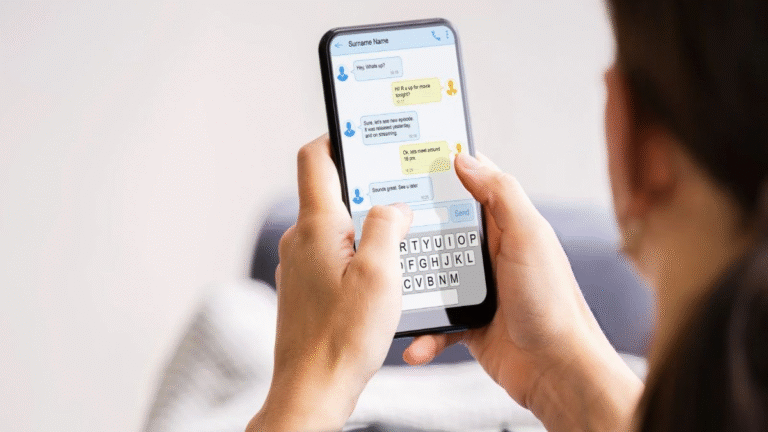

Text Templates That Get Replies Fast on Dating Apps
Sarah stared at her phone for twenty minutes, typing and deleting the same message repeatedly. The guy she matched with seemed like a perfect fit—they shared interests, had great photos, and had a witty bio. However, she couldn’t seem to come up with something to say that wouldn’t sound boring or desperate. Sound familiar?
Here’s the harsh truth: a staggering 85% of first messages sent on dating apps go unanswered. This happens because most people either send generic “hey” messages or overthink their approach, resulting in crickets in their inbox.
The key difference between being ignored and sparking engaging conversations often lies in having the right message templates readily available.
In this comprehensive guide, you’ll uncover over 50 proven text message templates that consistently elicit replies. You’ll also delve into the psychology of successful dating app conversations and master the art of transforming matches into meaningful connections, all supported by behavioral science and real-world testing.
Understanding Text Message Psychology in Modern Love
Dating app conversations operate on fundamentally different principles than face-to-face interactions. Within the first 3-5 seconds of reading your message, potential matches make snap judgments about your personality, intelligence, and romantic potential.
The Psychology of Digital First Impressions
Research from the Journal of Computer-Mediated Communication shows that people form impressions of others through text messages 30% faster than in-person interactions. Dr. Jennifer Aaker’s research at Stanford reveals that messages triggering emotional responses—whether curiosity, humor, or intrigue—receive 67% more replies than neutral communications.
The key lies in what psychologists call “cognitive ease”—making it effortless for someone to respond while simultaneously standing out from the crowd. Statistics from Hinge reveal that messages referencing specific profile details receive 3x more responses than generic greetings, while questions generate 2x more engagement than statements.
Common Challenges Around Dating App Messaging
Maya’s Story: The Overthinking Trap
Maya, a 28-year-old marketing professional, matched with someone who seemed perfect on paper. She spent an hour crafting what she thought was the perfect message, analyzing every word. When she finally hit send, her message was three paragraphs long, mentioned five different topics, and asked four questions. She never got a reply.
The Most Common Messaging Mistakes:
- Generic openers (“Hey,” “How’s your day?”) that blend into the background noise
- Overwhelming messages that require too much mental energy to respond to
- Interview-style questions that feel more like an interrogation than flirtation
- Compliments about physical appearance that immediately signal shallow intentions
- Inside jokes or references the other person can’t possibly understand
- Negative or controversial topics that create immediate friction
- Messages sent at poor timing (3 AM or during typical work hours)
- Follow-up messages sent too quickly when there’s no response
Research from Zoosk shows that messages sent between 6-10 PM on weekdays get 25% more responses, while weekend messages sent between 12-3 PM perform best.
Proven Strategies Backed by Psychology
Step 1: The Hook-Based Opening Strategy
Based on Robert Cialdini’s principles of persuasion, effective dating app messages use psychological triggers that compel responses. Here are proven templates organized by approach:
Curiosity-Based Openers:
- “I have a theory about people who [reference something from their profile]…”
- “Okay, I have to ask—what’s the story behind [specific photo/detail]?”
- “Plot twist: I think we might have [shared experience/interest] in common…”
Humor-Based Templates:
- “I see you like [interest]. I’m not saying we’re soulmates, but we’re definitely snack-mates “
- “Your profile made me smile, and that’s dangerous—I was trying to look mysterious today.”
- “I’m trying to figure out if you’re more [playful observation about their photos]…”
Shared Interest Templates:
- “Fellow [shared interest] enthusiast! What got you into [specific aspect]?”
- “I couldn’t help but notice [specific detail]. Have you tried [related experience/place]?”
Step 2: The Conversation Bridge Technique
Attachment theory, developed by John Bowlby, suggests people crave connection and security. Your follow-up messages should build on this by creating emotional bridges:
Follow-Up Message Templates:
- “That’s actually fascinating! I’ve never thought about [their response] that way before…”
- “You just reminded me of [related story/experience]. Have you ever…?”
- “I can tell you’re passionate about [topic]. What’s the most [adjective] experience you’ve had with it?”
Step 3: The Flirtation Escalation Framework
Research from Dr. Helen Fisher shows that successful romantic interactions progress through specific stages. These templates help navigate each phase:
Light Flirtation Templates:
- “I have to admit, your perspective on [topic] is pretty attractive “
- “Careful, you’re making me want to [related activity] with you…”
- “I’m starting to think you might be dangerously fun to hang out with…”
Confidence-Building Templates:
- “I bet you’re the type who [positive assumption based on conversation]…”
- “Something tells me you’d be amazing at [activity/experience]…”
- “I have a feeling our [shared interest] conversations would get pretty intense…”
Tools & Apps That Can Help
Profile Optimization Tools:
- Photofeeler (https://www.photofeeler.com) – Get feedback on your dating photos from real people to optimize attractiveness, trustworthiness, and smart ratings
- ROAST Dating (https://roast.dating) – AI-powered profile optimization that analyzes your photos and bio for maximum appeal
- Hinge Lab (https://www.hingeapp.com/lab) – Official resources from Hinge with data-backed profile and messaging advice
Conversation Enhancement Apps:
- Crystal (https://www.crystalknows.com) – Personality insights that help you tailor your communication style to different personality types
- Lex (https://thisislex.app) – Community-driven platform for meaningful connections with conversation starter ideas
- DateBrazen (https://www.datebrazen.com) – Dating coaching platform with message templates and conversation guides
Psychology-Based Dating Resources:
- Gottman Institute (https://www.gottman.com) – Research-backed relationship advice and communication techniques
- Attachment Style Quiz (https://www.attachmentproject.com/attachment-style-quiz/) – Understanding your attachment style for better dating communication
Expert Insights & Reliable Sources
Research-Backed Findings:
According to a comprehensive study published in Psychological Science, messages that demonstrate “other-focus” (genuine interest in the other person) rather than “self-focus” receive significantly more positive responses.
Dr. Eli Finkel from Northwestern University emphasizes that successful digital communication requires balancing authenticity with strategic presentation.
Psychology Today contributor Dr. Samantha Joel’s research reveals that people who use specific, observational openers see response rates increase by up to 300% compared to generic greetings. Her work emphasizes the importance of “costly signaling”—investing effort in personalized messages to demonstrate genuine interest.
Dating expert and Harvard Business Review contributor Logan Ury notes that the most successful daters treat online dating like a skill to be developed rather than leaving it to chance. Her research shows that people who use templates as starting points but personalize them consistently outperform both completely generic and completely improvised approaches.
Key Insights from Leading Relationship Experts:
Dr. Sabrina Romanoff, a relationship specialist at Verywell Mind, highlights the importance of emotional intelligence and the ability to foster psychological safety through text-based communication in achieving success in digital dating.
She suggests focusing on questions that encourage others to share positive experiences rather than potentially triggering topics.
Conclusion
Mastering dating app conversations isn’t about manipulating or tricking others—it’s about comprehending human psychology and fostering genuine connections through thoughtful communication.
While the templates and strategies in this guide offer a foundation, remember that authenticity and personalization are the keys to transforming matches into meaningful relationships.
The distinction between dating app success and frustration frequently hinges on possessing the appropriate tools and strategies.
These tried-and-true templates have empowered countless individuals to transform their dating app experiences from sources of stress into avenues for authentic connections.
Ready to transform your dating app game? Start implementing these templates today, but remember to adapt them to your personality and the unique person you’re messaging. Share your success stories in the comments below, and don’t forget to explore the recommended tools to take your dating confidence to the next level.
FAQ Section
Research shows optimal first messages are 2-3 sentences or 15-25 words. This length is engaging enough to show interest while being easy to read and respond to. Messages longer than 50 words see 25% lower response rates.
Data from multiple dating platforms shows peak response times are 6-10 PM on weekdays and 12-3 PM on weekends. Avoid sending messages after 11 PM or before 9 AM, as they’re often seen as desperate or poorly timed.
: These templates work across all major platforms including Tinder, Hinge, Bumble, and Match. Hinge (https://hinge.co) tends to reward more thoughtful, detailed messages, while Tinder responds better to shorter, humor-based approaches.
Look for responses that ask questions back, reference previous parts of your conversation, use emojis or exclamation points, and match your message length. Quick, one-word responses or long delays usually indicate lower interest levels.
Never use identical templates. Instead, use these as frameworks and personalize each message with specific details from their profile. People can sense copy-paste messages, and authenticity is crucial for building genuine connections.

Chloe James, a writer, relationship analyst, and cultural observer, delves into the transformative impact of technology on our connections, communication, and intimacy. As an author at CoupleUni.com, she has established a distinct niche by exploring the subtle yet profound influence of modern texting behaviors on relationships in the digital era.